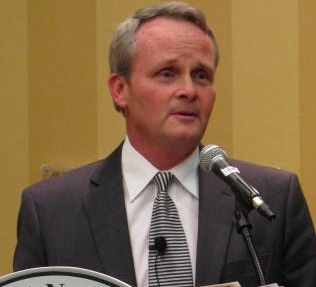
Hardheartedness, is an essential in the character of a libertine.
-- Samuel Richardson (1689-1761), Clarissa [according to Samuel Johnson]
Hardheartedness, is an essential in the character of a libertine.
-- Samuel Richardson (1689-1761), Clarissa [according to Samuel Johnson]


He is most certainly not a Christian, devout or otherwise.
... neither adulterers, nor effeminate, nor abusers of themselves with mankind ... shall inherit the kingdom of God.
-- I Corinthians 6:9f.
And why did Thiel's boyfriend, with whom he was cheating on his so-called spouse, die just like all the people die who cross Vladimir Putin? On which see below.
Meanwhile The Week here adds to this decidedly not Christian horror show by quoting a fornicating Episcopal priest who has the gall to call Thiel . . . heretical!
As an Episcopal priest, “I find Thiel’s warnings heretical,” said Kevin Deal in the San Francisco Standard. In the Bible, the Antichrist represents “a foil to Christ,” not “a tool to sow fear or division.” Thiel is cynically weaponizing “the language of faith” to serve his own ends.
Mr. Deal, formerly Mr. Neil, adopted his girlfriend's surname when they married after living together for over a year, including while at seminary. They were married, of course, by a female Episcopal priest. All of which was celebrated, of course, by The New York Times.
Thiel is heretical to these people because he is Republican, not because he is a faggot.
The UK Daily Mail here.
If you're looking for the Antichrist, look no further than these principals. Neither shall they say, Lo here! or, lo there! for, behold, the antichrist is in your midst.

 |
Martín de Azpilcueta (1492?-1586) |
Completely compatible, except for the usury lol.
Mike Solana is the protege of Republican Peter Thiel, another gay billionaire.

Here:
In other words, his progressivism consisted of wanting to make Catholic orthodoxy comprehensible to the modern world -- not in wanting to overturn those orthodoxies! The book goes on to talk about his shock in the years immediately following the Council to see how people within the Church used "the spirit of Vatican II" as a pretext to dismantle Catholicism. Ratzinger, a good-hearted soul who expected the best from others, had been terribly naive.
It wasn't just Ratzinger, however.
The same phenomenon occurred in Protestantism, and in politics.
President Ronald Reagan, for example, had campaigned in the 1970s on libertarian economic orthodoxies, in particular on cutting ordinary income tax rates because he believed people were better judges of what to do with their money than was government. He won in landslides.
But as Ratzinger never anticipated how nefarious forces in the church would use their freedom to indulge sinful human nature, Reagan never anticipated how rich people and corporations would use their tax savings windfalls to invest abroad instead of in the United States, shipping millions of formerly good middle class jobs abroad to cheaper labor markets, hollowing out the country and growing thereby even more fabulously rich in the process.
Underestimating sinful human nature has been the story of our times.


. . . You shall surely rebuke your neighbor, and not bear sin because of him.
-- Leviticus 19:17
Lying by omission is our way of life here in America, in service of our "live and let live" ideology, perhaps made most famous in the old "Don't ask, don't tell" policy of Bill Clinton about gays in the military.
Truth no longer exists. There is only "my truth".
Libertarianism = injustice.
I'm guessing he probably never read either one.
"The guardians, Plato’s philosopher-kings, can utterly control the lives of those in his charge, even to the point of censoring music and poetry, regulating pregnancy and childbirth, eliminating private property, and annulling the individual family. Aristotle departed from this conception of the good society and took as his point of departure the aspiration and freedom of the individual."
Aristotle, Politics, 1.1253a:
"The city-state is prior in nature to the household and to each of us individually...the state is prior by nature to the individual...a man incapable of entering into partnership...must be either a lower animal or a god."
Critics of Plato on this subject routinely omit that the idealistic elements of his utopian state apply only to the few, the guardian class, not to the general population, and that the guardians will be comprised only of the best sort. One may criticize Plato for making naive assumptions about human nature, but he does not deserve to be read any less carefully than does Aristotle, who is anything but a libertarian individualist.