
When a prophet speaketh in the name of the LORD, if the thing follow not, nor come to pass, that is the thing which the LORD hath not spoken, but the prophet hath spoken it presumptuously: thou shalt not be afraid of him.
-- Deuteronomy 18:22
When a prophet speaketh in the name of the LORD, if the thing follow not, nor come to pass, that is the thing which the LORD hath not spoken, but the prophet hath spoken it presumptuously: thou shalt not be afraid of him.
-- Deuteronomy 18:22


So ye shall not pollute the land wherein ye are: for blood it defileth the land: and the land cannot be cleansed of the blood that is shed therein, but by the blood of him that shed it.
-- Numbers 35:33
New Testament "theology" is pretty clear that it is the Jewish god who is ultimately responsible for shedding Jesus' blood:
For God so loved the world, that he gave his only begotten Son ...
-- John 3:16
He that spared not his own Son, but delivered him up for us all ...
-- Romans 8:32
God sent his Son to be our sin offering ...
-- I John 4:10
But God demonstrates His own love toward us, in that while we were still sinners, Christ died for us.
-- Romans 5:8.
The penalty for Jesus' murder is death according to the Law of Moses, but who could possibly kill God, the murderer, except God himself?
The Christian atheist Thomas J. J. Altizer, who died in 2018 at the age of 91, wrote in 1966 that the transcendent God of the Bible had truly died when he immanentized himself and entered human history through the Incarnation and was crucified. As a leading representative of The God Is Dead movement, the highly animated Altizer instantly became a pariah in America, which at the time literally wanted to kill him over it, as his obituary remembered:
He even went on the “Merv Griffin Show,” a popular television talk program, though the event, held before a live audience in a Broadway theater, was a debacle. He was given two minutes to speak. “The response was a violent one,” he wrote later, “forcing the director to close the curtains and order the band to play forcefully, and after this event a crowd greeted me at the stage door, demanding my death.”
But logically one should really go a step farther than Altizer and say that the Jewish god actually committed suicide according to this God Is Dead "theology" because God did all this on purpose.
After all, Jesus allowed himself to be crucified according to the wide evidence of the gospels and the New Testament, which insists that Jesus went to the slaughter like a sheep and opened not his mouth (Acts 8:32). This is exactly what one should have expected of a truly Divine Man bent on death.
This problem again illustrates the limits of "theology", Aquinas' queen of the sciences.
Her rational talk about God goes only so far, which Tertullian recognized when he said that the resurrection is certain because it is impossible (certum est, quia impossibile).
There are more things than the resurrection which are impossible.


... The blood of bulls and goats was always impotent; what was needed was the human sacrifice of total obedience, fulfilled in the cross. It’s not a conservative gospel, but a revolutionary one in which first things change place with last things. ...
To wit:
When you come into the land which the LORD your God gives you, you shall not learn to follow the abominable practices of those nations. There shall not be found among you any one who burns his son or his daughter as an offering, any one who practices divination, a soothsayer, or an augur, or a sorcerer, or a charmer, or a medium, or a wizard, or a necromancer. For whoever does these things is an abomination to the LORD; and because of these abominable practices the LORD your God is driving them out before you.
-- Deuteronomy 18:9ff.
They built the high places of Ba'al in the valley of the son of Hinnom, to offer up their sons and daughters to Molech, though I did not command them, nor did it enter into my mind, that they should do this abomination, to cause Judah to sin.
-- Jeremiah 32:35
Not only that, Leithart's interpretation of the Eucharist is an abomination to the Christian God, even whose catechumens were excluded from the Lord's Supper as strangers from the third and fourth centuries:
The Eucharist is the Lord’s, and our, hospitality to strangers.
To wit:
The Church urges the entire assembly of the faithful to pray for the catechumens, even though they are still strangers. Indeed, they do not yet belong to the Body of Christ, they have not partaken of the Holy Mysteries; they are still apart from the spiritual flock … They stand outside the royal court, far from the sacred forecourts. That is why they are sent away before those fearful prayers [of the Anaphora] are said. So she asks you to pray for them, that they may become fellow members with you and no longer be strangers and cut off.
— Apostolic Constitutions, 8.32 PG 1.1132B; Apostolic Tradition, 17, SC 11bis, p. 75

And the Pharisees also, who were covetous, heard all these things: and they derided him. And he said unto them . . . There was a certain rich man, which was clothed in purple and fine linen, and fared sumptuously every day: And there was a certain beggar named Lazarus, which was laid at his gate, full of sores, And desiring to be fed with the crumbs which fell from the rich man's table: moreover the dogs came and licked his sores.
And it came to pass, that the beggar died, and was carried by the angels into Abraham's bosom: the rich man also died, and was buried; And in hell he lift up his eyes, being in torments, and seeth Abraham afar off, and Lazarus in his bosom.
And he cried and said, Father Abraham, have mercy on me, and send Lazarus, that he may dip the tip of his finger in water, and cool my tongue; for I am tormented in this flame.
But Abraham said, Son, remember that thou in thy lifetime receivedst thy good things, and likewise Lazarus evil things: but now he is comforted, and thou art tormented.
And beside all this, between us and you there is a great gulf fixed: so that they which would pass from hence to you cannot; neither can they pass to us, that would come from thence.
Then he said, I pray thee therefore, father, that thou wouldest send him to my father's house: For I have five brethren; that he may testify unto them, lest they also come into this place of torment.
Abraham saith unto him, They have Moses and the prophets; let them hear them.
And he said, Nay, father Abraham: but if one went unto them from the dead, they will repent.
And he said unto him, If they hear not Moses and the prophets, neither will they be persuaded, though one rose from the dead.
-- Luke 16:14f., 19ff.
cf. John 5:45ff.:
Do not think that I will accuse you to the Father: there is one that accuseth you, even Moses, in whom ye trust. For had ye believed Moses, ye would have believed me: for he wrote of me. But if ye believe not his writings, how shall ye believe my words?

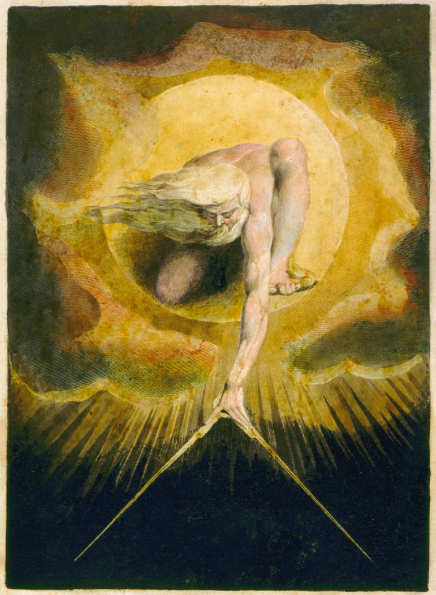
Hope dashed, but fear allayed.
Then Noah built an altar to the LORD, and took of every clean animal and of every clean bird, and offered burnt offerings on the altar.
And the LORD smelled a soothing aroma. Then the LORD said in His heart, I will never again curse the ground for man's sake, although the imagination of man's heart is evil from his youth; nor will I again destroy every living thing as I have done.
While the earth remains,
Seedtime and harvest,
Cold and heat,
Winter and summer,
And day and night
Shall not cease.
-- Genesis 8:20ff.
Thus I establish My covenant with you: Never again shall all flesh be
cut off by the waters of the flood; never again shall there be a flood
to destroy the earth.
And God said: This is the sign of the covenant which I make between Me and you, and every living creature that is with you, for perpetual generations: ...
the waters shall never again become a flood to destroy all flesh.
-- Genesis 9:11ff.


 |
| Moses Aaron and Hur by John Everett Millais |


 |
| Rare red tide hits Sydney beaches |