Saturday, January 21, 2023

Nor will I again destroy every living thing, and day and night shall not cease


Just as the promise of a coming prophet like unto Moses is set aside by the Torah itself, so also is the expectation of an apocalyptic final judgment ruled out by its testimony.

Hope dashed, but fear allayed. 


Then Noah built an altar to the LORD, and took of every clean animal and of every clean bird, and offered burnt offerings on the altar.

And the LORD smelled a soothing aroma. Then the LORD said in His heart, I will never again curse the ground for man's sake, although the imagination of man's heart is evil from his youth; nor will I again destroy every living thing as I have done.

While the earth remains,
Seedtime and harvest,
Cold and heat,
Winter and summer,
And day and night
Shall not cease. 

-- Genesis 8:20ff.

Thus I establish My covenant with you: Never again shall all flesh be cut off by the waters of the flood; never again shall there be a flood to destroy the earth.

And God said: This is the sign of the covenant which I make between Me and you, and every living creature that is with you, for perpetual generations:  ...

the waters shall never again become a flood to destroy all flesh.

-- Genesis 9:11ff.

Sunday, January 15, 2023

Luke omits in his version of the Olivet Discourse from Mark and Matthew the coming of false Christs who do signs and wonders

 For there shall arise false Christs, and false prophets, and shall shew great signs [σημεῖα] and wonders [τέρατα]; insomuch that, if it were possible, they shall deceive the very elect. 

-- Matthew 24:24

For false Christs and false prophets shall rise, and shall shew signs and wonders, to seduce, if it were possible, even the elect.  

-- Mark 13:22

As detailed below, Luke positively values the signs and wonders of the apostolic age. He certainly doesn't want a Jesus who throws shade on them, especially since it is really "the holy child Jesus" by whose name the signs and wonders are done.

And I will shew wonders in heaven above, and signs in the earth beneath; blood, and fire, and vapour of smoke:  

-- Acts 2:19

Ye men of Israel, hear these words; Jesus of Nazareth, a man approved of God among you by miracles [δυνάμεσιν] and wonders and signs, which God did by him in the midst of you, as ye yourselves also know: 

-- Acts 2:22

And fear came upon every soul: and many wonders and signs were done by the apostles.  

-- Acts 2:43

And now, Lord, behold their threatenings: and grant unto thy servants, that with all boldness they may speak thy word, By stretching forth thine hand to heal; and that signs and wonders may be done by the name of thy holy child Jesus.

-- Acts 4:29f.

And by the hands of the apostles were many signs and wonders wrought among the people; (and they were all with one accord in Solomon's porch.  

-- Acts 5:12

And Stephen, full of faith and power, did great wonders and miracles [signs] among the people. 

-- Acts 6:8

He brought them out, after that he had shewed wonders and signs in the land of Egypt, and in the Red sea, and in the wilderness forty years.  

-- Acts 7:36

Long time therefore abode they speaking boldly in the Lord, which gave testimony unto the word of his grace, and granted signs and wonders to be done by their hands. 

-- Acts 14:3

Then all the multitude kept silence, and gave audience to Barnabas and Paul, declaring what miracles [signs] and wonders God had wrought among the Gentiles by them.  

-- Acts 15:12

Luke's freedom in eliding entirely the "false Christs" line at a minimum shows that the apocalyptic tradition narrated in Matthew 24, Mark 13, and Luke 21 is not yet fixed in the evangelists' own time as they struggled to reimagine and repurpose the (failed) eschatological material of the earlier time of the historical Jesus which lies behind it.

It has long been recognized that this apocalyptic material is a series of independent units more or less successfully woven together into a "composite discourse", but it is a "tangled skein", some elements of which might be editorial by the evangelists, some pre-existing apocalyptic either Jewish or Jewish Christian, some authentically dominical, et cetera. So Vincent Taylor, The Gospel According to St. Mark, London 2nd edition, 1966, 1977, pp. 498ff., who considers Matthew a later version of Mark, but Luke, who has "little linguistic agreement with Mk.", to be a stand alone witness presenting material from "independent" sources who must be reckoned with for the development of apocalyptic but often is not.

As Taylor recognizes, Mark's vocabulary in 13:21f. has the "later ring" of "primitive Christianity" about it. It is an apocalyptic outlook now "strange to the mind of Jesus". So it would not be odd then for Luke to exclude it, concerned as he self-consciously is to lay out his history more accurately than have other evangelists.

What we have in these apocalyptic narratives, including Luke's, is revisionism at work.

The "false Christs" idea reflects later developments, a later Christianity on the way from a Judaism which had its own false prophets, to a later Pauline world populated also by a false gospel (II Cor. 11:4; Gal. 1:6), false apostles (II Cor. 11:13), false angels (II Cor. 11:14), the son of perdition (II Thes. 2:3), and ultimately the Antichrist(s) of I and II John.

The historical Jesus, imagining the imminent end of the world in his own lifetime, would never have imagined such developments by definition.

But Luke himself hasn't thought of such things, of course, nor about the implications for either his Gospel or his Apostle (Acts, primarily about Paul). Luke's aim is to present the signs and wonders characteristic of the early and middle Pauline period as proof of his Gospel.

What is also often not considered enough is that the false Christs language of Matthew 24 and Mark 13 might actually be explicit anti-Pauline propaganda, in which case this calumny might represent the particular trigger, among other deficiencies, which motivated Luke to compose his definitive two-volume work in defense of the real Jesus and his hero Paul as he understands them, in order that his patron Theophilus "may know the certainty of those things" in which he was instructed (Luke 1:4).
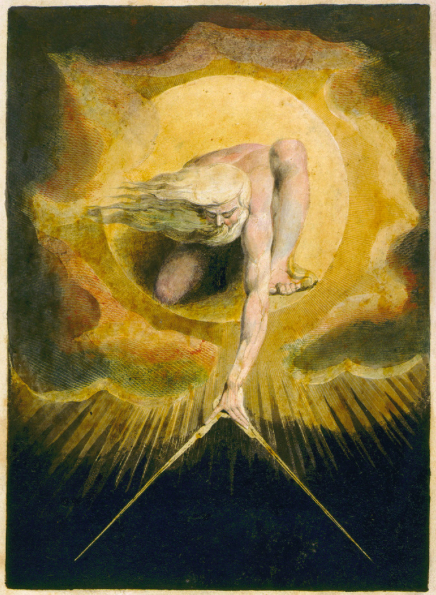
Thursday, January 5, 2023

Samuel Johnson was evidently a January 6th kind of Twelfth Nighter, not a January 5th


Twelfth Night, or What You Will (to give the play its full title) was probably commissioned for performance as part of the Twelfth Night celebrations held by Queen Elizabeth I at Whitehall Palace on 6 January 1601 to mark the end of the embassy of the Italian diplomat, the Duke of Orsino. It was again performed at Court on Easter Monday in 1618 and on Candlemas night in 1623.     

More.

And more.

Tuesday, January 3, 2023

Rod Dreher on the naive progressivism of Joseph Ratzinger, the now deceased Pope Benedict XVI

 Here: 

In other words, his progressivism consisted of wanting to make Catholic orthodoxy comprehensible to the modern world -- not in wanting to overturn those orthodoxies! The book goes on to talk about his shock in the years immediately following the Council to see how people within the Church used "the spirit of Vatican II" as a pretext to dismantle Catholicism. Ratzinger, a good-hearted soul who expected the best from others, had been terribly naive. 

It wasn't just Ratzinger, however.

The same phenomenon occurred in Protestantism, and in politics.

President Ronald Reagan, for example, had campaigned in the 1970s on libertarian economic orthodoxies, in particular on cutting ordinary income tax rates because he believed people were better judges of what to do with their money than was government. He won in landslides.

But as Ratzinger never anticipated how nefarious forces in the church would use their freedom to indulge sinful human nature, Reagan never anticipated how rich people and corporations would use their tax savings windfalls to invest abroad instead of in the United States, shipping millions of formerly good middle class jobs abroad to cheaper labor markets, hollowing out the country and growing thereby even more fabulously rich in the process.

Underestimating sinful human nature has been the story of our times.


Monday, January 2, 2023

Nostradamus was Jewish after all, so it's not surprising that popular Jewish media would promote the opportunistic astrologer

 Nostradamus predictions for '23: Great war, financial ruin, more...


Following popular trends, he wrote an almanac for 1550, for the first time in print Latinising his name to Nostradamus. He was so encouraged by the almanac's success that he decided to write one or more annually. ...

By 1566, Nostradamus' gout, which had plagued him painfully for many years and made movement very difficult, turned into edema. In late June he summoned his lawyer to draw up an extensive will bequeathing his property plus 3,444 crowns (around US$300,000 today), minus a few debts, to his wife pending her remarriage, in trust for her sons pending their twenty-fifth birthdays and her daughters pending their marriages.     

More.

It's always about how the fool and his money soon are parted one from the other.


Tuesday, December 27, 2022

Mary the mother of Jesus attempted a family intervention


A plot for His assassination was secretly on foot. And at this juncture the incident of my text, which we owe to Mark alone of the Evangelists, occurs. Christ’s friends, apparently the members of His own family--sad to say, as would appear from the context, including His mother--came with a kindly design to rescue their misguided kinsman from danger, and laying hands upon Him, to carry Him off to some safe restraint in Nazareth, where He might indulge His delusions without doing any harm to Himself. They wish to excuse His eccentricities on the ground that He is not quite responsible--scarcely Himself; and so to blunt the point of the more hostile explanation of the Pharisees that He is in league with Beelzebub.

Conceive of that! The Incarnate Wisdom shielded by friends from the accusation that He is a demoniac by the apology that He is a lunatic! . . . 

There is nothing that commonplace men hate like anything fresh and original. 

-- Alexander Maclaren (1826-1910), Exposition on Mark 3:21

Thursday, December 22, 2022

At Christmas thoughts do not naturally turn to Mary's crazy, problem child of the Gospel of Mark

Bart Ehrman, December 2014, here:

Mark does not narrate an account of Jesus’ birth. Mark never says a word about Jesus’ mother being a virgin. Mark does not presuppose that Jesus had an unusual birth of any kind. And in Mark (you don’t find this story in Matthew and Luke!!), Jesus’ mother does not seem to know that he is a divinely born son of God. On the contrary, she thinks he has gone out of his mind. Mark not only lacks a virgin birth story; it seems to presuppose that they [sic] never could have been a virgin birth. Or Mary would understand who Jesus is. But she does not.

It’s no wonder that when Matthew and Luke took over so many of the stories of Mark, they decided, both of them, *not* to take over Mark 3:20-21. They had completely different view of Jesus’ mother and his birth.

Friday, December 16, 2022

Gay man conducts online poll with a good number of queer respondents asking why they're leaving Christianity, finds LGBT discrimination is the main reason


I'm shocked, right?

But why does this get treated as legitimate by Real Clear Religion when it's obviously biased and skewed?

Monday, December 12, 2022

Friday, December 9, 2022

When you go to church, the person sitting next to you is very likely to be just fine with same sex marriage


Wherefore come out from among them, and be ye separate, saith the Lord, and touch not the unclean thing; and I will receive you.

-- II Corinthians 6:17

And I heard another voice from heaven, saying, Come out of her, my people, that ye be not partakers of her sins, and that ye receive not of her plagues.  

-- Revelation 18:4

Wednesday, December 7, 2022

2.3 million Methodists expected to flee United Methodism by the end of 2023 over LGBT and become independent to avoid the fate of the Episcopalians

 Unsurprisingly, the liberal denominations of the old Mainline Protestant world are the fastest to decline. The Episcopal Church just announced that in 2021 it lost 56,314 members while attendance dropped 36 percent from 2020. Sixty-two congregations were permanently closed. Average worship dropped from 55 to 21 persons. Ninety percent of Episcopal churches have fewer than 100 attendees on Sunday. 

Many Methodist congregations seek to escape this grim fate. And who can blame them?

Tuesday, December 6, 2022

Act like a man


 Acquit thee bravely, play the man;
Look not on pleasures as they come, but go:
Defer not the last virtue; life's poor span
Makes not an ell by trifling in thy woe.

-- George Herbert

Watch ye, stand fast in the faith, quit you like men, be strong. 
 
-- I Corinthians 16:13

Wednesday, November 30, 2022

Jon D. Levenson thinks Yonatan Adler's thesis is very learned but problematic because Pentateuchal law is prescriptive and pre-Hellenistic

 Much more problematic, however, is Adler’s claim that before the Hellenistic period biblical law was perceived as descriptive and iconic, rather than prescriptive and to be obeyed by individuals. This misses the fact that the law collections in the Pentateuch appear within a framework of covenant, with their particular norms thus revalorized as covenantal stipulations. And covenantal stipulations are very much intended to be obeyed.

Thus, Deuteronomy, the book most imbued with the conceptions and idioms of covenant, time and again insists that its laws be carefully practiced and continually kept in mind. It promises blessings to those who heed that counsel and curses to those who violate it, proving faithless to the covenant. “For the word is very close to you,” reads the conclusion to one of its most memorable exhortations, “in your mouth and in your heart to practice it” (Deuteronomy 30:14). This was written long before anyone ever heard of Ptolemy II or the Hasmoneans.

More.

Saturday, November 26, 2022

Like brute beasts we travel with the herd


 Like brute beasts we travel with the herd, and are never so solicitous for the rightness of the way, as for the number or figure of our company.

-- John Rogers (1679-1729)

Friday, November 25, 2022

The good we love for its own sake we obey


 It is not imaginable that men will be brought to obey what they cannot esteem.
 
-- Robert South

There is a kind of good we love both for its own sake and for its consequences.

-- Plato, Republic II, 357b,c

Thursday, November 24, 2022

Finally, some really good reporting on how American Puritanism became a feature of the political left

 . . . according to Rothman . . . there is “a popular mythology that long ago outlived its usefulness,” he said in a direct Twitter message to Tablet, which “postulates that the vestiges of prudish American puritanism are exclusive to the political right.” Instead, he said, “with the policing and enforcement of moral frameworks again becoming a feature of the left, America’s vestigial puritanism is assuming a form that is far more historically familiar.” ...

“Today,” Rothman said in his message to Tablet, “as the left gravitates away from liberalism and toward progressivism, they are assuming many of progressivism’s conceits—chief among them, a messianic utopianism that views everything, even life’s most banal pleasures, through the prism of political activism.”

More.

Monday, November 21, 2022

The many are trusting, lazy-minded followers


 Most take things upon trust, and misemploy their assent by lazily enslaving their minds to the dictates of others.

-- John Locke

Friday, November 18, 2022

Michael Gerson has died


“Fate may do what it wants,” he said. “But this much is settled. In our right minds, we know that love is at the heart of all things."     

Obituary here.


Thursday, November 17, 2022

You shall know them by their shrugging


 There is a kind of sluggish resignation, as well as poorness and degeneracy of spirit, in a state of slavery.

-- Joseph Addison