Showing posts with label Money. Show all posts

Thursday, August 31, 2023

How to print money on the gold standard


 How happy should we be if we had the privilege of employing the sheers, for want of a mint, upon foreign gold, by clipping it into half-crowns!

-- Jonathan Swift

Tuesday, August 1, 2023

Study finds most people who stop going to church do so for the banal reason that they love money and status more

 Enthusiast for the Christian communist Bruderhof Gang Jake Meador, here:

Davis and Graham also find that a much larger share of those who have left church have done so for more banal reasons. The book suggests that the defining problem driving out most people who leave is … just how American life works in the 21st century. Contemporary America simply isn’t set up to promote mutuality, care, or common life. Rather, it is designed to maximize individual accomplishment as defined by professional and financial success. Such a system leaves precious little time or energy for forms of community that don’t contribute to one’s own professional life or, as one ages, the professional prospects of one’s children. Workism reigns in America, and because of it, community in America, religious community included, is a math problem that doesn’t add up.     

Same as it ever was.

Ye cannot serve God and mammon.

-- Matthew 6:24; Luke 16:13

For the love of money is the root of all evil.

-- I Timothy 6:10


Tuesday, April 25, 2023

Follow the money


 They follow virtue for reward to-day;
To-morrow vice, if she give better pay:
We are so good, or bad, just at a price;
For nothing else discerns the virtue or vice.

-- Ben Jonson

Tuesday, May 10, 2022

Don't be stupid with your money, protect yourself


And Rebbe Yitzchak said, A person should always divide his money into three: one third in land, one third in commerce, and one third at hand.
 

-- Babylonian Talmud, Bava Metzia 42a (quoted here)

Americans stupidly now derive 42% of their wealth from stocks:

Through the end of 2021, the share of household wealth that comes from directly or indirectly held stocks hit a record 41.9%, more than double where it was 30 years ago, according to data from the Federal Reserve. 

Tuesday, May 25, 2021

Even sound money tells lies: "The golden age is back" (for about five minutes)


Western Caesar, AD 286-293


Whatever victories the several pretenders to the empire obtained over one another, they are recorded on coins without the least reflection.

-- Joseph Addison

The coins [he issued] include many literary allusions but none more so than in the cryptic … legend that appears on many of the silver coins:  RSR.  This was short for Redeunt Saturnia Regna, ‘The Golden Age is back’, from Virgil’s Fourth Ecologue. 

Tuesday, March 24, 2020

Coronavirus catastrophe exposes fraudulent Christianity at the heart of Trumpism: Love of money is the root of all libertarianism, more important than life itself


“You’re basically saying that this disease could take your life but that’s not the scariest thing to you. There’s something that would be worse than dying,” Carlson said. “If I get sick, I’ll go and try to get better, but if I don’t, I don’t, and I’m not trying to think of any kind of morbid way, Tucker, I’m just saying that we’ve got a choice here and we’re going to be in a total collapse, recession, depression, collapse in our society if this goes on another several months, there won’t be any jobs to come back to for many people,” he said. ... “But the point is, our biggest gift we give to our country and our children and our grandchildren is the legacy of our country." 

And having food and raiment let us be therewith content. But they that will be rich fall into temptation and a snare, and into many foolish and hurtful lusts, which drown men in destruction and perdition. For the love of money is the root of all evil: which while some coveted after, they have erred from the faith, and pierced themselves through with many sorrows. 

-- I Timothy 6:8ff.

Thursday, January 12, 2017

Thursday, August 18, 2016

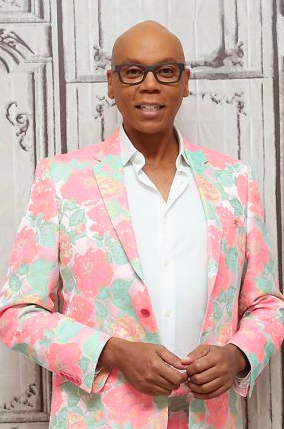
RuPaul admits the gay man he really is has simply been posing as a tranny to stick it to the rest of us and make some dough

Most everyone has experienced the latent rage of the homosexual at one time or another, it's just that no one will talk about it openly anymore now that the gay mafia has turned the whole country into its collective receiving end. But the truth is gay men are violent at heart because they hate themselves for what they do.

RuPaul, quoted here:

There are many misconceptions people who dress in drag — most frequently that they are transsexual. "Transsexual is, in fact, kind of the complete opposite," RuPaul says. "Drag queens are saying, 'Identity? Ha!' Transsexuals are saying, 'Identity is very serious to me and I need you to understand what my identity is.'" He continues, "For me, it was never about being a woman at all. It was always about 'f-you' to society. In a male-dominated culture, this is the greatest taboo you can do. This is the thing that boys are not supposed to [do] in a male-dominated culture." And, he adds, "It was something that I stumbled onto that I realized I could do really well and make a lot of money at it."

Saturday, June 11, 2016

Chris Lehmann blames gnosticism for American Christians' development of a sanctified money cult

From an interesting review here by a progressive, which entirely misses the materialism inherent in both the American conservative and progressive interpretations of the meaning of the Christian faith, making gnosticism kind of beside the point because it's adapted for materialist ends, which in a real gnostic would be a contradiction in terms.

Americans, it seems, specialize in perverting not just the orthodoxy, but also the heterodoxy:

At the root of this depressing defeat for a prophetic and socially-conscious Christian faith, in Lehmann’s reading, is what amounts to a strong and ever-present current of Gnosticism: the belief that I can rise above all obstacles and can transform myself and succeed against all odds with God’s help; that I can even transcend basic human limitations—suffering, illness, and death—and become God-like in my personal triumph. It’s always about me and “my” God; it’s never about transforming the social conditions that cause so much unnecessary suffering for so many.

Lehmann demonstrates how during times of the most acute public suffering, like the depressions of 1837, 1857, 1893, etc., almost all Protestant thought leaders served up new formulas for individual self-improvement rather than challenging the presumption and arrogance of wealth. Hence his title, “The Money Cult”: in what many are pleased to regard as a Christian nation, the functional faith of most believers has usually boiled down to a sanctified form of acquisitive individualism.

Friday, December 4, 2015

If you have enough money to buy pot, you aren't a disciple of Jesus

The pot-smoking Christians of Colorado: Stoner Jesus Bible Study.

Here's their website.

Here's their news story.

Here's Jesus' verdict: If you have enough money to buy pot, you aren't a disciple.

Then Jesus beholding him loved him, and said unto him, One thing thou lackest: go thy way, sell whatsoever thou hast, and give to the poor, and thou shalt have treasure in heaven: and come, take up the cross, and follow me. -- Mark 10:21

Thursday, April 16, 2015

Thy money perish with thee

Then Simon himself believed also: and when he was baptized, he continued with Philip, and wondered, beholding the miracles and signs which were done. ... And when Simon saw that through laying on of the apostles' hands the Holy Ghost was given, he offered them money, Saying, Give me also this power, that on whomsoever I lay hands, he may receive the Holy Ghost. But Peter said unto him, Thy money perish with thee, because thou hast thought that the gift of God may be purchased with money.

-- Acts 8:13, 18ff.

Sunday, March 22, 2015

Ideas have consequences: The time value of money is being destroyed by the Christian West

The 10-year government bond currently yields less than 1% in the following countries of Europe:

Switzerland: -.18
Germany: +.18
Czech Republic: .23
Netherlands: .26
Denmark: .28
Austria: .31
Finland: .32
France: .38
Belgium: .41
Sweden: .41
Latvia: .54
Lithuania: .59
Ireland: .78

In these nations of Europe and the world, the 10-year government bond currently yields less than 2%:

United States: 1.93
Portugal: 1.65
United Kingdom: 1.54
Canada: 1.44
Norway: 1.34
Italy: 1.22
Spain: 1.15
Slovenia: 1.08

The only others of note are:

Hong Kong (former British colony): 1.50
Israel (!): 1.11
Japan (conquered by America): .33

----------------------------------------------------------------------

Who may worship in your sanctuary, LORD?
Who may enter your presence on your holy hill? ...
Those who lend money without charging interest,
and who cannot be bribed to lie about the innocent.

-- Psalm 15:1, 5

Do good and lend, hoping for nothing again.

-- Luke 6:35


Sunday, December 15, 2013

Put By More Than Money

So advises the ghost of Christmas present to Scrooge, as played by George C. Scott in one of the many productions I have seen of Charles Dickens' A Christmas Carol. The line is not in the original, but captures the spirit of it pretty well. The idea seems oddly out of place these days, seeing that many people haven't put by nearly enough money to survive what has turned out to be a protracted period of unemployment, crushing debt, dispossession and economic stagnation.

We watch a number of these productions in our home in the days leading up to Christmas every year, and in 2009 Disney produced another which was notably the occasion for some materialist nonsense by one Peter Foster (which can still be accessed in full here):

Would the world have been better without Scrooge? Did he force people to do business with him? Was Bob Cratchit not free to find better employment elsewhere? And if no such employment was available, was that Scrooge’s fault? Scrooge’s “conversion” is also problematic. Once Marley’s spectre has shown Scrooge what the afterlife looks like for the uncharitable, is there any need for the three Christmas ghosts? Scrooge has been “scared good” the old Christian way. With fear of eternal damnation.

The author is at pains in the essay to help the reader achieve, dare we say it, a more charitable view of capitalism than these productions usually afford, the 2009 Disney production starring Jim Carrey in sympathy with and perfectly timed for, it would seem, that odd thing, the wealth re-distributionist 44th president. Foster points out, quite rightly, how there has been a strong tendency in all quarters and evident for a long time, to encourage us to bite the invisible hand that feeds our society. And in this Mr. Foster surely is correct.

But if this tendency often expresses itself in caricatures of the reality in films, it is to miss the point entirely to conclude that Scrooge was simply "scared good." If Mr. Foster had taken the time to re-familiarize himself with Dickens' story, it is not evident from that remark. The ghosts were not superfluous because Dickens was anything but a proponent of some stern form of Christian fundamentalism any more than he was of the revolution of the proletariat. 

On the contrary, we should consider that the ghosts sent to Scrooge revealed to him many important truths which speak to the mysteries and wonders of life beyond the superficialities of mere production and consumption with which both Marxism and now capitalism concern themselves in a world flattened by the dismal science of economics. And it is this flat view of life which animates Mr. Foster no less than it does his anti-business bogeymen.

At least the economists of the past paid back-handed compliments to the more real, multi-dimensional world we all used to inhabit, where "markets can remain irrational longer than you can remain solvent" and "in the long run, we're all dead." As Dickens reminds us in the beginning of his story, at Christmas we open our shut-up hearts freely and think of people as "fellow-passengers to the grave," into which no new 3D film technology from Disney will scarcely be able to take us.

No, Dickens is more a proponent of the methods of Socrates than of some wild-eyed hellfire and damnation preacher. Scrooge lives the unexamined life, which to Socrates is a life not worth living. Wedded to a Christian conception of reality in which the grace of God trumps all, it is Divine Providence which sends the spirits who help awaken Scrooge to life's examination and explanation, showing him the meaning behind the "shadows of the things that have been, that are, and are yet to come."

A thoughtful, educated person would instantly be reminded of the shadows constantly beheld by the cave-dwellers in Plato's allegory in Book X of The Republic, whom the philosopher comes down from the mountain to release, fixed in their seats facing the darkness, unable to see behind themselves. He comes to loosen their chains, which stand for Ignorance, that they may turn and see the objects on which the Light shines, creating the shadows their eyes mistook for the true things.

These Socratic ghosts show Scrooge that he once thought his own life had been truly worth living; 
that he was actually happy once, open to the world and other-directed;
that love was real and precious;
that people could mean it when they repented of their mistakes;
that they could change for the better;
that each life has the potential to mean something positive to every one around it;
that people exist who are quite happy without money;
that if individuals mattered to God they should matter to him;
that we must pay homage to ordered liberty, be thankful and toast the founder of our feast, whatever else others may think of him;
that choosing justice for its own sake is as indispensable for the conduct of his own business as for the conduct of the business of life.

"Mankind was my business!" shrieked the ghost of Marley.

And it is ours.


Saturday, July 20, 2013

As With Jesus, Money Also Lay At The Very Beginning Of Luther's Message

"Cur Papa, cuius opes hodie sunt opulentissimis Crassis crassiores, non de suis pecuniis magis quam pauperum fidelium struit unam tantummodo Basilicam sancti Petri?"

"Why does the pope, whose wealth today is greater than the wealth of the richest Crassus, build the basilica of Saint Peter with the money of poor believers rather than with his own money?"

-- Thesis 86 of Martin Luther on the power and efficacy of indulgences, 31 October 1517